

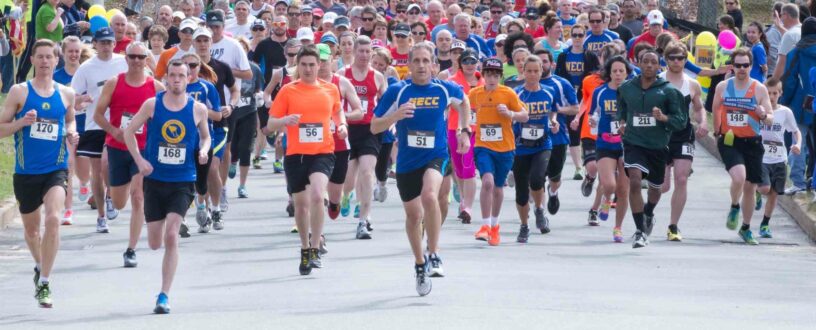



My blog about leadership, higher education and going the extra mile is called “Running the Campus” because I’m a runner, I’m a college president, and I love a good Dad Joke (Runner + President = “Running the Campus,” get it?)
Not long ago, a frequent RTC reader pointed out that I hadn’t actually written a story about running in a while and asked if I had given it up as I’ve gotten older.
Ouch.
No, I have not. I am definitely still a runner, and I’m still out there running the campus, though I admit that times have changed and so have I. At this stage of life, I am experiencing both the challenges and benefits of being an aging runner.
Youth Takes the Lead
My father was an accomplished marathon runner with dozens of 26.2-mile races under his belt, finishing most of them in less than three hours. In his prime, he was fast and could seemingly run forever.
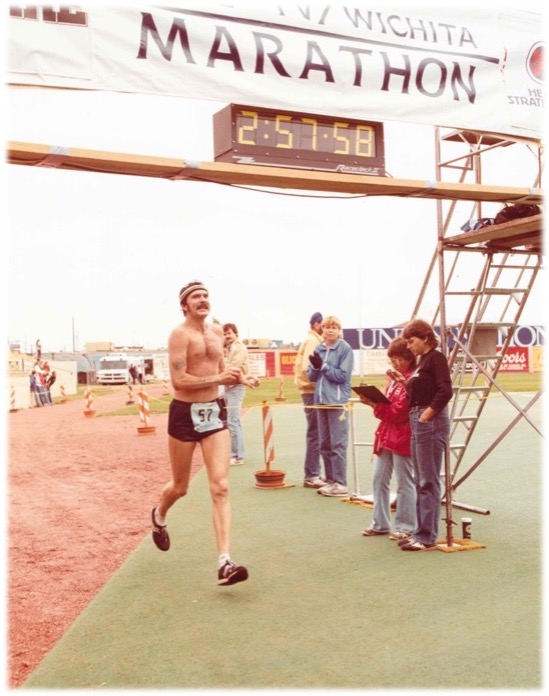
I vividly remember the first time I went running with him and had to slow my pace and even wait for him to catch up with me a few times.
We lived a thousand miles apart and he was visiting shortly after my first daughter was born. I was thirty-three, filled with boundless energy, and only knew one speed when I ran: all out.
He was approaching sixty, exactly the age I am now, though at the time he suddenly seemed surprisingly old and slow.
How did this happen to him?
He was a retired Marine. A vegetarian who hadn’t had a sip of alcohol since the 1970’s and had spent decades conditioning his body to run fast and far.
I was a college professor. A committed carnivore who loved a good IPA, dabbled in home brewing, and as a sleep-deprived new father was only managing to go for a run a few times a week.
But somehow, I was running circles around him.
The competitor in me was thrilled, but the part of me that was my father’s son was sad. It felt like the end of an era.
Aging Runner Pitfalls
Looking back at that moment from today’s vantage, I have a better appreciation for the notion that “youth is wasted on the young.”
But with age, as the other saying goes, comes wisdom, and now that I am the runner with dozens of years and thousands of miles under my belt, I have a much better understanding of what Dad was experiencing that day on a Michigan suburban side street a quarter century ago.
No one lives forever, and even the fittest among us can’t escape the natural effects of aging.
Older athletes discover that age-related muscle loss, coupled with reduced oxygen processing capacity, which declines about 10% each decade after you turn thirty, makes maintaining speed more challenging.
Knees, hips, ankles and other body parts lose their flexibility and range of motion.
My runs require more energy from me now, deliver more frequent aches and injuries, and demand more recovery time.
I used to bound out of bed, strap on a headlamp, and run five miles before dawn. Now I have a cup of coffee, read the news, practice my Duolingo, then go for a 5K run an hour later.
Aging Runner Perks
Despite the increasing challenges, though, I keep running because it is still my favorite way to exercise, and there are some unexpected benefits I’m discovering as an aging runner that the younger me was moving too fast to appreciate.
As a younger runner, I was constantly training for my next race, which typically meant lacing up my shoes, popping in my AirPods, cranking up some 160 BPM classic rock and tearing off down the road—alone.
As my pace has slowed, I find myself running socially more with my wife (always my favorite road partner), friends, and colleagues, and when I’m running alone, I’m as likely to enjoy an audiobook or podcast as a banger from John Mellancamp or the Boss.
When I’m running for speed, which I still do occasionally, I have finally mastered “negative splits,” a strategy the most successful runners use for conserving energy for later in the race that always eluded my over-eager younger self. Now, as my body warms up, the second half of my run is naturally faster than the first half.
Because I no longer run every day, two or three times a week I focus more on strength and flexibility instead and lift weights, do calisthenics or practice yoga.
I’m enjoying the scenery more and that cross-training will pay dividends as I get even older.
Oh, and because I’m running fewer miles, I’m saving money on shoes.
Back when I was regularly running 40-50 miles a week or more, I would wear through a pair of Sauconys, Brooks, or New Balance at least every three months. Now, my Altras (with that extra wide toe box for feet splayed by decades of running, hiking, and climbing) last me half a year or more, pounding 15-20 miles a week of pavement or trails.
A Body in Motion
I’m grateful for my father’s inspiration, and after outrunning him years ago, at this stage of life feel like I’m settling into a comfortable pace alongside him.
A body in motion tends to stay in motion, and I plan to stay in motion as long as I possibly can. A little slower, perhaps, and not quite as far or as often, but happy to be out there running the campus, and beyond.

