




(Lessons from Ian Leslie and Sir Ken Robinson)
QI (for Quite Interesting) is a popular British game show in which contestants are asked extremely obscure questions that they most likely will not know the correct answers to, then rewarded with points based on how interesting their responses are.
When pitching the idea for the show to the BBC, John Lloyd, QI’s producer, reportedly noted that, “There is nothing more important or strange than curiosity.” While all animals share the drives for food, sex, and shelter, “Pure curiosity is unique to human beings. When animals snuffle around in the bushes, it’s because they’re looking for the three other things. It’s only people, as far as we know, who look up at the stars and wonder what they are.”
But in a world—or a universe—that offers endless things to be curious about, and limitless ways to snuffle around in the bushes and wonder at them, particularly in this new Age of Artificial Intelligence (AI), how do we decide what is most important to know, and how best to teach, learn and use it?
People have been trying to figure this out for thousands of years.
The Great Library of Alexandria, Egypt, built sometime in the third century BCE, was the largest and most famous center for scholarship and the exchange of ideas in the ancient world. Originally organized by a student of Aristotle’s, the library was charged with the ambitious task of collecting all the world’s knowledge.
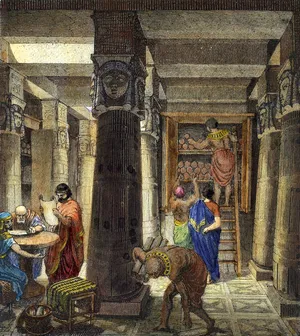
Boasting perhaps half a million papyrus scrolls and early books on subjects ranging from mathematics and physics to geography, medicine, philosophy and the plays of Aeschylus, Sophocles, and Euripides; and hosting visiting thinkers and lecturers from both the West and the East, Alexandria was a beacon for learning, and a monument to human curiosity and accomplishment—until it was sacked and eventually burned to the ground in a series of civil wars and invasions.
Today, our Alexandria is Google, with the company mission to “Organize the world’s information and make it universally accessible and useful.”
And, hopefully, fireproof.
Of course, Google has recently been joined by Microsoft, Amazon, Meta, Apple and thousands of other companies around the world using artificial intelligence to organize and make available everything we have ever thought or created.
But whatever form human knowledge takes, papyrus or lights flickering on a screen; and wherever and however it is stored, flammable wooden shelves or massive underground, air-conditioned server farms; we still face the dilemma, perhaps especially now, of how best to use it—and even highly intelligent minds do not always agree.
Will artificial intelligence be the dawn of a new Age of Enlightenment? Or the beginning of the end of our species?
Will it lead to bold breakthroughs in science, technology, and art? Or to the devolution of thinking and creativity as we all become dependent on ideas recycled through AI?
I’m as curious about these questions as anyone, especially as Northern Essex Community College develops our own policies and processes for how we use AI.
Like a growing portion of the American population, I also listen to a lot of audiobooks, and recently spent a chunk of my weekend going old school with Ian Leslie’s treatise on human exploration and understanding, written in the pre-AI, Stone Age days of 2014, Curious: The Desire to Know and Why Your Future Depends on It.
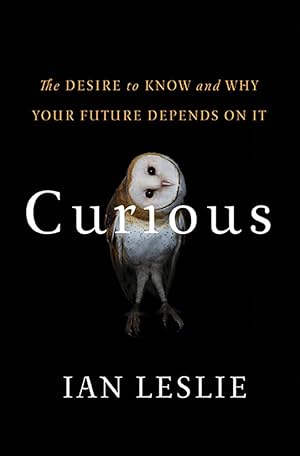
While not focused on artificial intelligence, Curious addresses something far more important and more likely to be a predictor of where the current maelstrom around AI may take us: Human nature.
Leslie is a British author, speaker, and advertising consultant (clearly a curious man himself) who writes about social trends, psychology, politics, and whatever else catches his interest.
In Curious he describes how curiosity works, some of the challenges of becoming curious in a technology-dependent world of haves and have-nots and offers some tips for strengthening your own curiosity.
For truly curious deep divers, you can read Leslie’s book and learn about diversive, epistemic, and empathic forms of curiosity, how memory works, and the importance of culture to creating and efficiently passing along knowledge.
Or, for Google- or ChatGPT-age skimmers, here are a few of the key takeaways:
- Not surprisingly, Leslie is worried that technology, with its various forms of easily accessible information, threatens habits of deeper inquiry, leaving us all a mile wide and half an inch deep.
- Upper- and middle-class children ask more questions, and are asked more questions, by their parents, so society suffers from a “curiosity divide.”
- “Curiosity is contagious. So is incuriosity.”
- The “curiosity zone,” the mode we are in when we are most ready to learn new things, is a combination of surprise, knowledge, and confidence.
That last one may be one of the most important—and debatable—ideas in Leslie’s book.
Basically, Leslie argues that, in order to be curious in the first place, we have to know at least a littleabout a topic, in order to want to know more.
AI champions and AI skeptics can both rally around this one: Used effectively, AI can help us learn enough about a topic to want to know more; or, AI can fill-in-the-blanks with simple information on demand, stopping curiosity before it gets started.
At heart, Leslie is an educational traditionalist, who believes there is an important place in schools for a canon of facts and ideas that students should be taught—by rote memorization if necessary—in order to have a base to build on.
Like E.D. Hirsch back in the 1980’s, who argued in Cultural Literacy that every American child should be taught basic facts about history, geography, literature and other topics, and even included a lengthy list of necessary topics, such as the Bible, the Civil War, gravity, the Alamo, and phrases like “Easy come, easy go”; Leslie suggests that we can, and should, decide that some ideas are more important than others.
He also tries to dispel a few “myths” about progressive approaches to education that he thinks do more harm than good, including the ideas that “children don’t need teachers to instruct them”; that “schools should teach thinking skills instead of knowledge”; and that “facts kill creativity.”
And in attempting to debunk those myths, Leslie runs smack into some rather widespread trends in education today, including a few we practice here at NECC, like self-paced learning, competency-based education, instruction based on individual student “learning styles,” and the “flipped classroom” or “hybrid classes,” in which traditional lecture material is shared with students outside of class, and class time is used for discussion, active learning, and self-directed work groups.
While Leslie might appreciate what we call our “Core Academic Skills” in areas like written communication, quantitative reasoning, information literacy, science and technology, public presentation, and global awareness; he might doubt our larger ambition, which is to help students become effective “critical thinkers” so that whatever subject matter they are studying or grappling with, they will have the necessary reasoning skills to make informed and effective decisions.
And we’re not alone in striving to get out of the box.
The most popular TED Talk of all time is an 18-minute presentation by another British author and speaker, Sir Ken Robinson, called “Do Schools Kill Creativity?” (which inspired this even shorter, animated version, “Changing Education Paradigms.”)
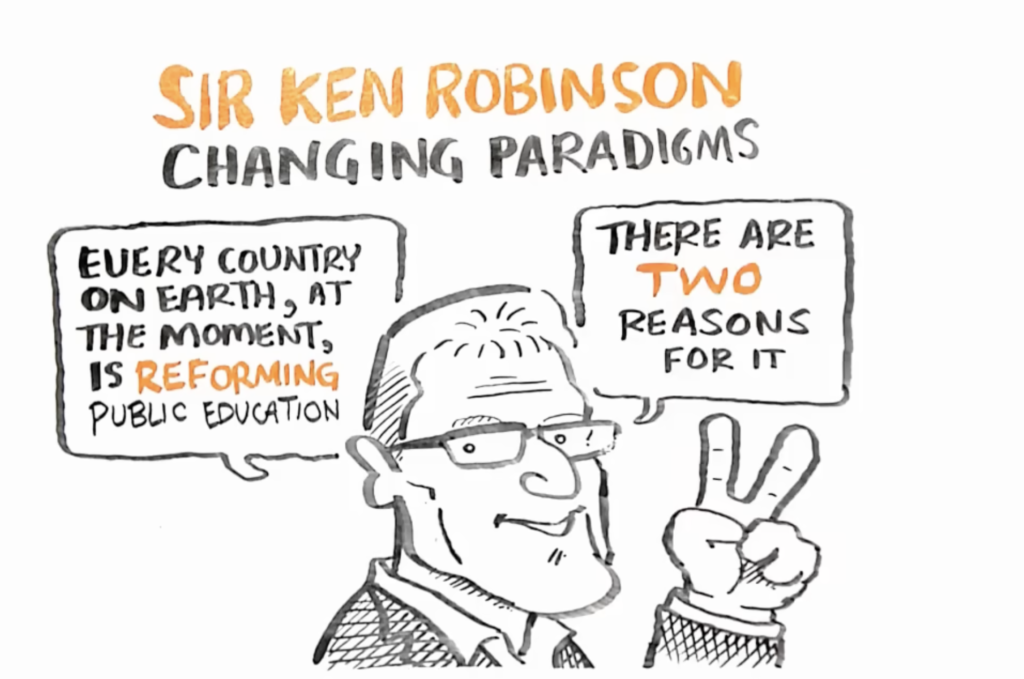
As the first few seconds of his talk will quickly show, Sir Ken has little time for the Great Ideas approach to teaching and learning but instead challenges us to “radically rethink” the way we teach kids, and invites educators to encourage young ones to dance, experiment and make mistakes.
Paraphrasing Pablo Picasso, Robinson suggests that “All children are born artists. The challenge is to remain artists as they grow up.”
A few takeaways from his tirade against the sausage-making approach to teaching and learning:
- “Creativity is as important as literacy, and we should treat it with the same status.”
- “We don’t grow into creativity; we grow out of it.”
- “Truthfully, what happens is, as children grow up, we start to educate them progressively from the waist up. And then we focus on their heads. And slightly to one side.”
Like Maria Montessori a century before him, Robinson strafes at the purely rational and practical approach to education, and advocates for more personal freedom for students to pursue their natural curiosity and creative impulses. He spurns notions of any kind of common curriculum; and finds devices like standardized tests not just dampening but deadening to curiosity and the human spirit.
Here, too, whether you’re an AI skeptic or an AI champion, you can find grist for your mill: While relying on AI to create for you removes human creativity from the equation, using AI as a tool to enhance your own ideas can take human creativity to new levels.
There are, of course, benefits, challenges, and unproven theories behind both Robinson’s freewheeling Creativity, and Leslie’s more rational and pragmatic Curiosity.
Letting students follow their strengths and natural impulses toward discoveries, new information, and artistic creation, with or without AI, can be liberating and joyful. It leaves the door to possibility wide open, embracing many ideas, cultural norms, and forms of expression. It can also, honestly, be a little messy and hard to manage, especially in time- and resource-constrained classrooms.
Meanwhile, the “cultural literacy” approach can feel overly rigid, prescribed, and limiting; and in an age when the world is connected, and connecting, like never before, a standard list of what should be known risks being parochial and excluding other cultures and perspectives.
Still, it’s hard to argue with Leslie when he points out that two of the greatest minds in western culture—Shakespeare and Galileo—were each born in 1564 and likely attended schools that lined students up in rows to recite Latin grammar from ancient classical textbooks by Seneca and Cicero.
Would they have accomplished even more, or much less, with the aid of ChatGPT, Perplexity AI or Claude?
When it comes to whether and how we embrace artificial intelligence, perhaps the most important takeaways from Robinson and Leslie are the points they agree on.
Both scorn standardized testing, Sir Ken because of its rigidity and lack of creativity, and Leslie for its superficiality.
Robinson is direct on the matter: “Not everything important is measurable, and not everything measurable is important.”
One of Leslie’s tips for staying curious is to “turn puzzles into mysteries.” For him, a multiple-choice question is a simplistic puzzle, while an essay requiring you to tap into a storehouse of deeper knowledge is a far worthier mystery.
The highest and best uses of artificial intelligence, Robinson and Leslie would argue, are not the simple storage and retrieval of simple, measurable information, but vaulting farther in the quest to unravel humankind’s greatest mysteries.
Perhaps most importantly right now, both Leslie and Robinson share skepticism about short term “training” of people toward simple, mechanical tasks that can be (and are rapidly becoming) automated, and that will not prepare them with deeper knowledge for lifelong career pursuits.
Already, the ranks of computer coders, data entry clerks, bookkeepers and all kinds of customer service agents are being replaced by “agentic” AI tools, while professions that still require emotional intelligence and human discernment like healthcare, education, management, art and design are likelier to have bright futures.
For his part, Leslie has even prepared a list of “Nine Principles for Success in the Age of AI,” which include tips like, “Don’t be human slop”, “Impose your personality on your work”, “Develop strong judgment” and, channeling Sir Ken, “Express yourself creatively.”
At NECC, our mission statement proudly declares we are here “to educate and inspire our students to succeed,” and as we, like every other college, company, and community on the planet right now sort out what AI means for us, that mission to educate and inspire our students toward success is what will guide us—creatively, curiously, and in every other way we can find.

