


America is getting older: Our nation turns 250 next year.
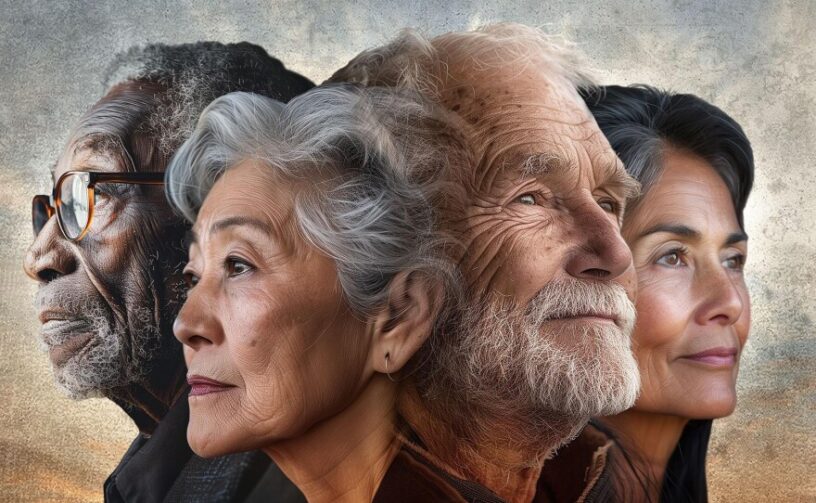
And as we celebrate the semiquincentennial of the Declaration of Independence and forging of these United States, our citizens are getting older, too.
For the first time ever, the median age in America topped 39 last year.
Thanks to increased life expectancy, declining birth rates, and Baby Boomers entering their senior years, the number of Americans 65 and older is expected to more than double by 2040.
Leading the pack?
According to the Pew Research Center, the centenarian population in the United States (people over a hundred years old) is projected to quadruple over the next 30 years.
Seventy is the new forty.
It’s a good time to consider the importance of lifelong learning, now that most of us can be expected to lead longer lives.
I recently had the opportunity to address the annual meeting of AgeSpan, an organization, like similar ones across the country, devoted to connecting people of all ages and abilities with the information and services they need to help them lead fulfilling lives in their communities.
It was an opportunity to reflect not only on AgeSpan’s magnificent mission, the amazing work of its leaders, staff, and volunteers, and the accomplishments of some community members selected for recognition; but also on the important role that community colleges play in lifelong learning, and on my own, personal experience with aging.
This is a version of what I shared with the AgeSpan audience.
There is No Expiration Date for Learning
Thank you, AgeSpan, for the important work you do, and for celebrating lifelong learning, and congratulations to the five inspiring individuals we’re honoring today. You truly embody what it means to keep learning, growing, and giving back at every stage of life.
And clearly, you all know that, when it comes to learning, growing, and giving back at every stage of life, there are no rules, right?
Laura Ingalls Wilder was 65 years old when she published Little House in the Big Woods, which became a series of beloved books and the well-known television show Little House on the Prairie.
Ray Kroc was a milkshake machine salesman who bought his first hamburger franchise and began scaling up McDonald’s at 52 years old.
Elizabeth Warren was 63 years old when she campaigned for her first elected office and became a senator for Massachusetts.
And in May of 2012, during my first graduation ceremony as the President of Northern Essex Community College, I handed a diploma to 64-year-old Pat Lundin, who took her first class at NECC in 1967.
The year I was born.
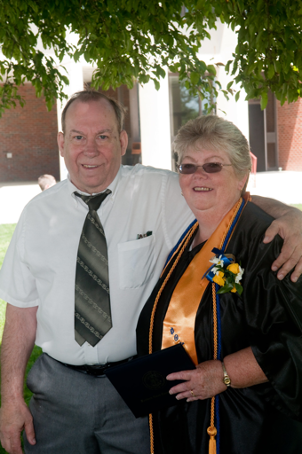
Pat didn’t take classes continuously between 1967 and 2012. She raised children, worked as an operator for New England Telephone, managed her family through health crises and financial challenges, and just kept going until she crossed that stage decades after taking her first math class, with her parents, Claire and Joe Bunker, then both 82 years old, in the front row, cheering for their daughter’s academic accomplishment.
There are no deadlines, term limits, or expiration dates for learning, for creating, for inventing, and accomplishing.
Lifelong Learning is at the Heart of the Community College Mission
Now, I have an advantage: I am fortunate to be surrounded each and every day by community college students of every age, all engaged in the act of lifelong learning.
While most people may think of college students as teenagers who recently graduated from high school living in dormitories, the average age of community college students is 27, most do not live on campus, and many are raising families of their own.
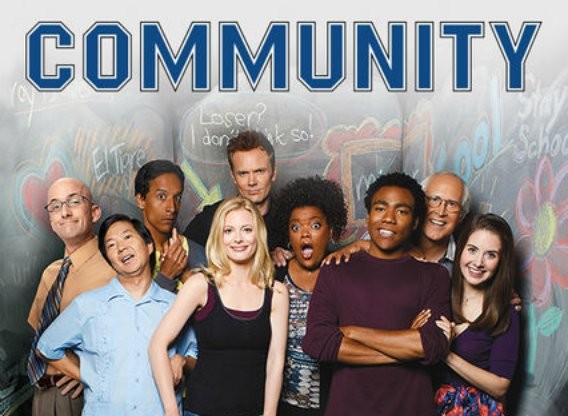
Each semester at Northern Essex Community College, we have students as young as 14 or 15 taking “Early College” classes through their high schools, and we have students in their sixties, seventies, or eighties taking classes for personal interest or to finish what they may have started a long time ago.
NECC is a lot like AgeSpan: At Northern Essex, and at community colleges everywhere, we welcome learners of all ages.
We believe education doesn’t stop after graduation—it continues through every new experience, every new curiosity, and every new skill developed.
We encourage older adults to explore our wide variety of classes—whether that’s learning to paint, studying history, exploring creative writing, brushing up on technology, or discovering a new career path.
Our classrooms are filled with people who bring different life stories and perspectives—and that mix of experiences enriches everyone’s learning, younger and older students alike.
Youth Hasn’t Lived Up to Its Potential—Yet
The first time I heard the saying, “Youth is wasted on the young,” I was probably in my twenties and I laughed at the idea.
Preposterous!
In your twenties, after all, you’re invulnerable, right? What better time of life to bestow youth than when you have the energy, the resilience, and the idealism to enjoy and make the most of it?
Well, now that I am well into my fifties, rapidly approaching another milestone birthday, I have a different perspective.
I admit, I may have picked up some of it from a book by Chip Conley that my wife gave me on my last birthday: Learning to Love Midlife: 12 Reasons Why Life Gets Better with Age.
If you’re not familiar with Chip Conley, he is a hotel entrepreneur and best-selling author of a number of business books, most of them focused not so much on business, but on how to be true to yourself and spread happiness, while succeeding in business.
Seven years ago, when he was the age that I am today, he founded the Modern Elder Academy, the world’s first “midlife wisdom school” in California, and he has been on a mission to spread more of them around the country.
As Conley explains in Learning to Love Midlife, and as I have been experiencing, your forties, fifties, sixties, and beyond, instead of a time of decline and loss, can be a period of growth, wisdom, freedom and deeper fulfilment in our physical, emotional, intellectual, vocational, and spiritual lives.
A time when, especially today, we have more years ahead of us than we might have guessed, and we can spend those years unencumbered by some of the anxieties and drives of youth, make friends with our emotions, benefit from the wisdom we have gained, make choices about where we invest our time, and not just grow old, but grow whole.
In other words, there is something those of us in the room past middle age know and have in common:
We’re older, we’re wiser, we’re probably more deliberate and less impulsive.
Youth isn’t wasted on the young exactly, but it hasn’t yet lived up to its potential—yet.
That potential is filling this room here today.
So, thank you, AgeSpan, for playing a critical role in connecting people of all ages and abilities with the information and the services they need to help our older neighbors lead fulfilling lives in their communities, and for bringing us all together to celebrate, as Chip Conley recommends, “why life gets better with age.”
The Power of Generativity
None of this is to suggest, of course, that, just because we have aged, we have all the answers and are capable of just going it on our own. Quite the opposite, which is why AgeSpan’s unique mission of bringing people of all ages together is so vital.
In his Eight Stages of Psychosocial Development, psychologist Erik Erikson described the seventh stage, which tends to happen between the ages of 40 and 65, as “Generativity vs. Stagnation,” the age at which we strive to create or nurture things that will outlast us.
We parent children, we create or contribute to community organizations, we reach back to those who are younger than we are—to the generations that will follow us—and we serve as mentors or coaches to their development.
We make our mark, as today’s honorees have shown us how to do so magnificently.
Like Pastor José Estrada, who at age 89 continues to teach at Fellowship Bible Church, assists the new pastor, and tends to the needs of the congregation.
And John Hamilton, age 80, a retired Marine Corps veteran and attorney who still uses his legal knowledge and skills to help those in need in his community.
And Diane Klein, 77 years old, who teaches Spanish and French to adult learners in Newburyport.
And 75-year-old Robert Kinsman, a retired engineer and Air Force veteran who volunteers his time and fundraising skills with the American Heart Association, Disabled American Veterans, and other non-profit organizations.
And Jacoba Olivero, age 65, who immigrated to the United States, learned English as an adult, and volunteers her time as a board member with Lawrence Community Works; and who also, I am very proud to say, recently earned her associate degree in human services from Northern Essex Community College!
By the way, at least three of our five honorees today are bilingual or trilingual, which I hope everyone here recognizes is a superpower.
José, Diane y Jacoba, yo estudiando Español con Duolingo en mi cellular. Entiendo un poco y puedo leer bastante bien, pero, soy muy lento escuchar y hablar.
At age 58, I am learning Spanish, and I have a 1,425-day streak going with Duolingo on my cell phone. I’ve picked up a lot of vocabulary and can read reasonably well but am quite slow when listening and speaking.
In fact, when someone speaks to me in Spanish and expects me to respond, I immediately get nervous. My face flushes and the palms of my hands sweat.
I’m a 58-year-old college president who regularly gets up in front of hundreds of people to talk about all sorts of things. I’m not shy.
But I’m human, and I get very nervous when I struggle to say what I want to be able to say.
I admire people like José, Diane and Jacoba who can communicate effectively in more than one language—yet another way they demonstrate the value of lifelong learning.
On the Brink of Everything: Grace, Gravity, and Getting Old
I’d like to leave you with some thoughts from someone I consider to be one of my favorite authors, educators, poets, and philosophers of life.
Parker Palmer is the founder of the Center for Courage and Renewal, and the author of a dozen or so books that have served as helpful guides to me for decades.
Early in my career, I discovered Palmer’s The Courage to Teach, which offered advice to educators about how to be their authentic selves in the classroom, and effectively make personal connections with their subjects and their students as a way of inspiring them to greater heights of learning.
Later, I found Palmer’s Let Your Life Speak: Listening for the Voice of Vocation to be one of the simplest and most profound meditations on choosing and following a career path I had ever encountered. Its wisdom helped me determine when and how I would become a college president, and in turn, I’ve used it to help guide students and professional colleagues in search of the next steps on their vocational journeys.
A few years ago, just before he turned 80 years old, Parker Palmer wrote one more book that is helping me think about the years that lie ahead for me, and how to make the best of them: On the Brink of Everything: Grace, Gravity, and Getting Old is a collection of essays and poems that explore how Palmer is experiencing the process of aging.
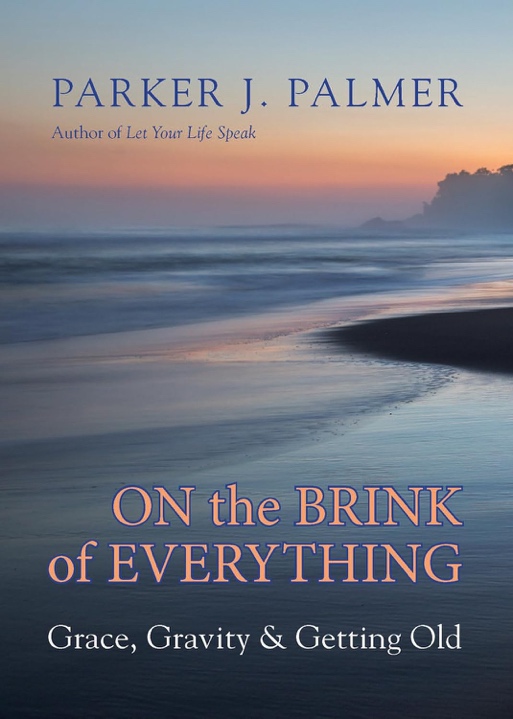
Together, his ruminations are a combination of gravity (the real limits, losses, and vulnerabilities that come with aging), levity (his unique humor and delight in simple things) and generosity (a sense of purpose, and the sharing of wisdom).
As Palmer acknowledges, and as many of us in the room understand: “Age brings diminishments, but more than a few come with benefits.”
Channeling Kris Kristofferson (or Janis Joplin), Palmer writes, “Old age is no time to hunker down, unless disability demands it. Old is just another word for nothing left to lose, a time of life to take bigger risks on behalf of the common good.”
Thank You, AgeSpan
That is the spirit that AgeSpan celebrates today and every day: There is value, there is power, and there is potential in every age and every stage of life, especially when we use our value, power, and potential on behalf of the common good.
Whether it’s delivering Meals on Wheels, helping other older adults with money management, providing Medicare counseling, or simply offering companionship as a friendly visitor—the volunteers of AgeSpan are living examples of lifelong learners and community contributors.
And the staff and leaders of AgeSpan are among the most remarkable models of that lifelong learning and community building that the Merrimack Valley has to offer.
Thank you, AgeSpan, for all you do to make our communities places where every person, at every age, has the opportunity to learn, to grow, and to give the best of who they are and what they have to offer.

